
Duty of care and the real cost of people’s time
Deliver your duty of care for everyone on your site. One system to know who’s on-site, keep them safe, and account for the real cost of people’s time.

Sign-in that leads the way
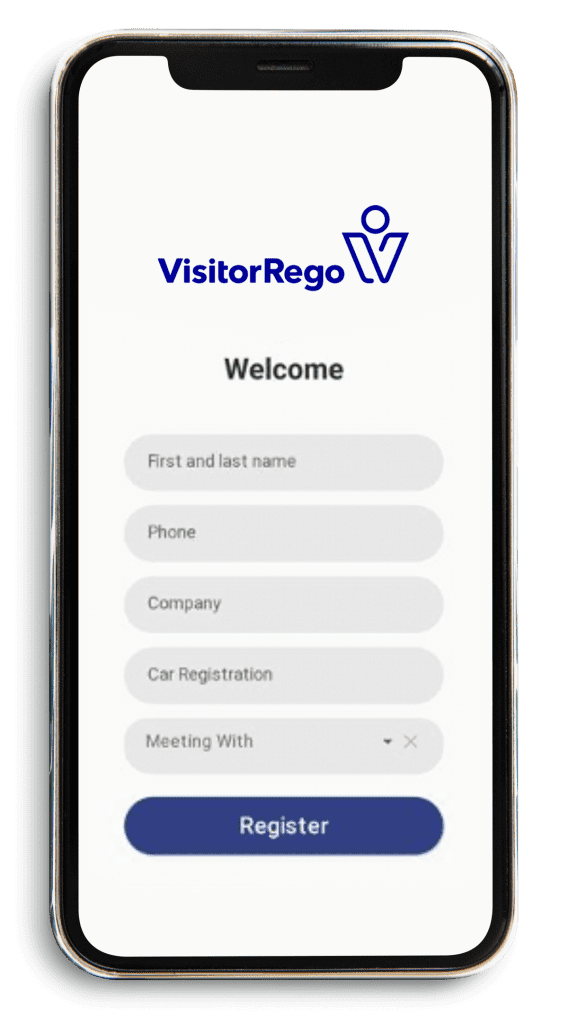
VisitorRego lets visitors sign in and out quickly and easily — so reception stays welcoming, records stay accurate, and your people stay safe.
Why you need a sign-in system
Almost every organisation has at least three kinds of people coming through the gate: visitors, staff and contractors. The moment any of them steps on site, the business owes them a duty of care — and owes itself an answer to one deceptively simple question: who, exactly, is on our site right now? A sign-in system is how you answer it — and how you prove you could.
Visitors — guests in your care
A visitor is a guest. They don't know your hazards, your rules or your escape routes — which is why a visitor is accompanied at all times by the staff member they came to see: their host. Your duty of care to them starts before they're past reception: they need to be told the rules surrounding their visit, and agree to them. And if the alarm sounds, you must be able to contact them and account for them, by name, on the muster list. Sign-in is the moment all of that happens — who they are, who their host is, the rules acknowledged, the muster list ready.
Contractors — unattended, so the bar is higher
Contractors come on site to work, and they work unattended. That freedom carries conditions: a contractor must be inducted in your site's rules and hazards, certified for the work they do, and permitted to do it — and every induction, certificate and permit carries an expiry date. The contractor who was authorised today may be unauthorised tomorrow. So authorisations can't be checked once and filed away; they have to be checked every single time the contractor signs in. And like everyone else on site, in an emergency a contractor must be contactable, notifiable and accounted for.

Staff — your own people, the same duty
Staff carry the same requirements as contractors: inductions that lapse, certifications and training that expire and must be kept current — and the same needs in an emergency: contactable, notifiable, accounted for. Being on the payroll doesn’t reduce the duty of care you owe a person; if anything it deepens it.

Time on site — your greatest cost, finally visible
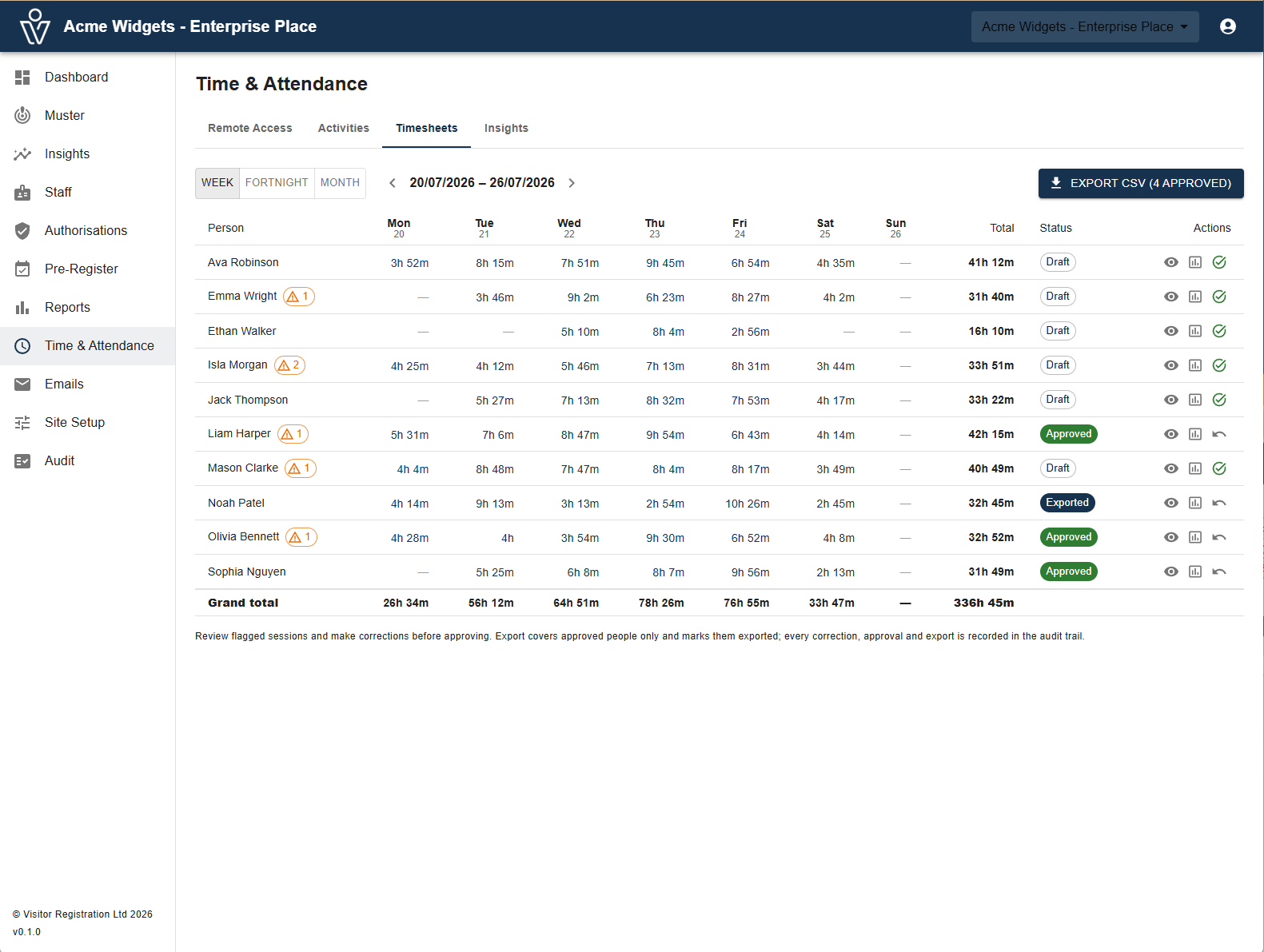
Every sign-in and sign-out captures something no roster or timesheet quite does: the actual time a person was on site. For most businesses, people's time is the single greatest cost on the P&L — and the sign-in process is the simplest, most honest way to see it: per person, per day, per site.
The site is no longer the whole story
Work now happens at home, in the field and across town. Remote work adds a new dimension to both halves of the story: managing people's time when there is no gate to walk through, and knowing where your people are when an emergency happens. Signing in from their own phone extends the duty of care — and the time capture — to wherever the work is.